

Assistance Dog Harness
In the world of assistance dogs, the right assistance dog harness can make all the difference. But what makes a harness stand out? It’s all about the design and features that focus on the comfort, safety, and performance of these amazing dogs.
Top Harness Features
- Understand the importance of a properly fitted service dog harness for your dog’s comfort and safety.
- Explore the different types of assistance dog harnesses available, including mobility and guide dog harnesses.
- Learn how to measure your dog accurately to find the perfect fit and ensure your service dog’s mobility and support.
- Discover techniques for introducing the harness to your canine companion and maintaining it over time.
- Explore complementary accessories, such as leashes and vests, to complete your service dog’s apparel.
Understanding the Importance of a Well-Fitted Service Dog Harness
Getting the right fit for an assistance dog harness is key to your dog’s comfort and safety. Good assistance dog equipment stops skin irritation and lets your dog focus on their important tasks. This helps them give you the mobility support and disability assistance you need every day.
Ensuring Comfort and Safety for Assistance Dogs
A mobility harness that doesn’t fit right can cause skin problems, muscle pain, and injuries. This can hurt your service dog. By choosing a harness made for your dog’s size and shape, you make sure they’re comfortable and safe. This lets them do their job well and with focus.
The Role of a Harness in Facilitating Mobility and Support
A well-fitting canine support vest or dog mobility aid is key for your service dog to help you. The right harness design helps them move better, stay stable, and guide you. This makes life better for you and your dog.
“A well-fitted service dog harness is not just about comfort – it’s about empowering your assistant to be the best version of themselves.”
Knowing how important a well-fitted service dog harness is helps keep your dog happy and helps them assist you better in your daily life.
Types of Assistance Dog Harnesses Available
Choosing the right assistance dog harness is key for your dog’s needs and tasks. There are many designs, each made for different situations. It’s important to pick one that fits your dog’s needs.
Mobility Harnesses for Physical Assistance
Mobility harnesses help dogs support people with mobility issues. They spread the dog’s weight out evenly. This reduces pressure on the dog’s joints and muscles.
These harnesses have adjustable straps, padded handles, and strong materials. They make sure the dog is comfortable and safe. They also help the dog assist their human partner.
Guide Dog Harnesses for Visually Impaired Handlers
Guide dog harnesses are for dogs that help visually impaired people. They let the dog move and connect with their handler securely. The harness has a special handle or loop for the handler to hold.
This lets the handler follow the dog and move around safely. Guide dog harnesses also have reflective strips for visibility and strong materials for lasting use.
| Harness Type | Key Features | Suitable For |
|---|---|---|
| Mobility Harness | – Distributes weight evenly – Padded handles – Reinforced construction | Dogs assisting individuals with mobility challenges |
| Guide Dog Harness | – Distinctive handle or loop for the handler – Reflective strips for visibility – Durable materials | Dogs guiding visually impaired handlers |
Looking at the different service dog harnesses will help you find the best one for your dog. Whether they’re helping with physical tasks or guiding someone, there’s a harness for them.
Service Dog Harness: Key Features to Consider
Choosing the right service dog harness is key for your dog’s comfort and performance. It’s important to look at adjustability and durability. These features affect how well the harness works over time.
Learn How To Size A Collar For Your Dog: Dog Collar Sizing
Adjustability and Growth Accommodation
Adjustability is a must for service dog harnesses. Dogs grow and change, so their harness needs to too. Find harnesses with many adjustment points like straps and buckles. This lets you tailor the fit to your dog’s changing size.
This way, the harness stays comfy and secure as your dog grows.
Durability and Ease of Maintenance
Service dogs face tough challenges every day. Their gear must be strong to last. When picking a service dog harness, check the materials. Look for strong nylon or leather that can handle daily tasks.
Easy maintenance is also key. Being able to clean and check the harness for damage helps it last longer. Choose harnesses that are easy to wash and inspect.
Focus on adjustability, durability, and easy maintenance when choosing a mobility harness or canine support vest. This ensures your service dog has the best disability support gear for their job.
Measuring Your Dog for a Proper Fit
Choosing the right assistance dog harness is key for your dog’s comfort and how well they can help you. It’s important to measure your dog’s body accurately. You should look at the girth, chest, and neck sizes.
Getting help from a knowledgeable customer service team is a big plus. They can guide you on the best size and fit for your dog. This ensures you find the perfect mobility harness or support vest.
Finding the right harness size is crucial for your service dog’s health and how well they can assist you. A well-fitting aid can greatly improve your dog’s comfort and how they help you.
Measuring for a Precise Fit
- Girth: Measure the circumference of your dog’s chest, just behind the front legs.
- Chest: Measure the circumference of your dog’s chest at the widest point, usually just in front of the hindquarters.
- Neck: Measure the circumference of your dog’s neck, just behind the ears.
| Measurement | Size Guide |
|---|---|
| Girth | 12-16 inches |
| Chest | 16-22 inches |
| Neck | 10-16 inches |
These are general guidelines, but the best fit can vary. Your dog’s breed, build, and unique traits matter. With the right customer service support, you can make sure your dog’s harness fits perfectly.
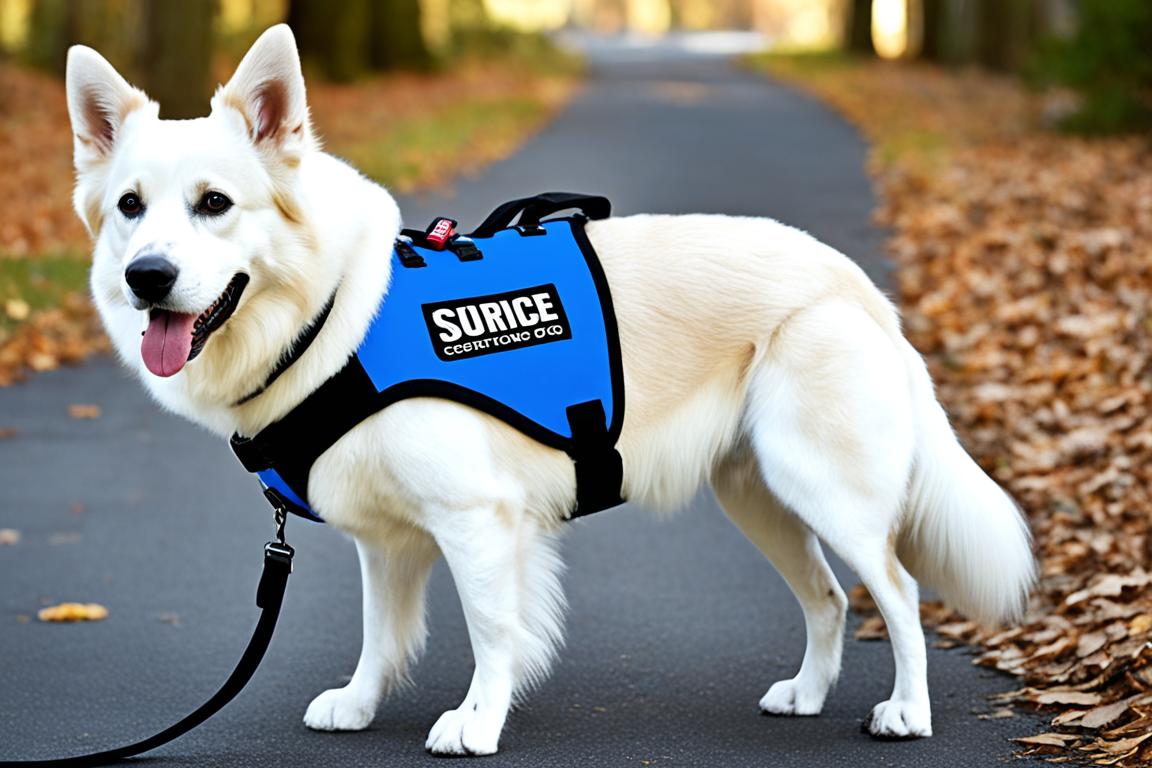
“A well-fitted harness is essential for your service dog’s well-being and their ability to assist you effectively.”
Introducing the Harness to Your Service Dog
Adding a new assistance dog harness to your dog’s life needs patience and a positive vibe. Use good training and rewards to make your dog feel comfy and confident with their gear.
Positive Reinforcement and Training Techniques
It’s important to make your dog like the harness. Start by letting them get used to it slowly, giving them treats and praise. Keep making them wear the harness for longer times, but stay calm and encouraging.
Using positive training helps your dog feel good about the harness. Give them treats or toys when they act calm and listen while wearing it. This makes them think the harness is a good thing, making it easier for them.
- Gradually introduce the harness, using treats and praise to create a positive association
- Slowly increase the duration your dog wears the harness, maintaining a calm and encouraging attitude
- Utilise positive reinforcement training techniques, rewarding your dog for calm and obedient behaviour while wearing the equipment
“Building a positive relationship between your service dog and their harness is key to ensuring a smooth and comfortable transition.”
By slowly introducing the harness and using positive reinforcement, your service dog will feel secure and confident in their gear.
Caring for Your Service Dog Harness
Looking after your assistance dog harness is key to its lasting use and effectiveness. Clean it with mild soap and water to keep it fresh and free from dirt and smells. Check the harness often for any damage like fraying or broken parts.
Fixing these problems quickly keeps your service dog safe and comfortable at work.
Cleaning and Inspection for Wear and Tear
To clean your service dog’s harness, just follow these steps:
- Gently brush off any loose dirt or debris using a soft-bristled brush.
- Mix a mild, pet-safe soap with warm water and use a clean cloth to wipe down the harness thoroughly.
- Rinse the harness with clean water to remove any soap residue.
- Allow the harness to air dry completely before re-fitting it on your service dog.
Checking the harness regularly is also important for its reliability. Look for signs of wear and tear, such as:
- Fraying or cracking of the material
- Loose or broken stitching
- Damage to the buckles, D-rings, or other hardware
- Stretching or deformation of the adjustable straps
If you find any problems, fix them quickly. This keeps your service dog safe and comfortable while they help you.
| Maintenance Task | Frequency |
|---|---|
| Cleaning the Harness | Weekly or as needed |
| Inspecting for Wear and Tear | Monthly or before each use |
By doing these simple things, you can make sure your service dog’s harness stays in great shape. It will support and assist your dog for many years.
Choosing the Right Assistance Dog Harness Accessories
There are many accessories that can make your service dog harness work better and safer. Picking the right leash, vest, or other gear is key. It helps make a complete and supportive outfit for your service dog.
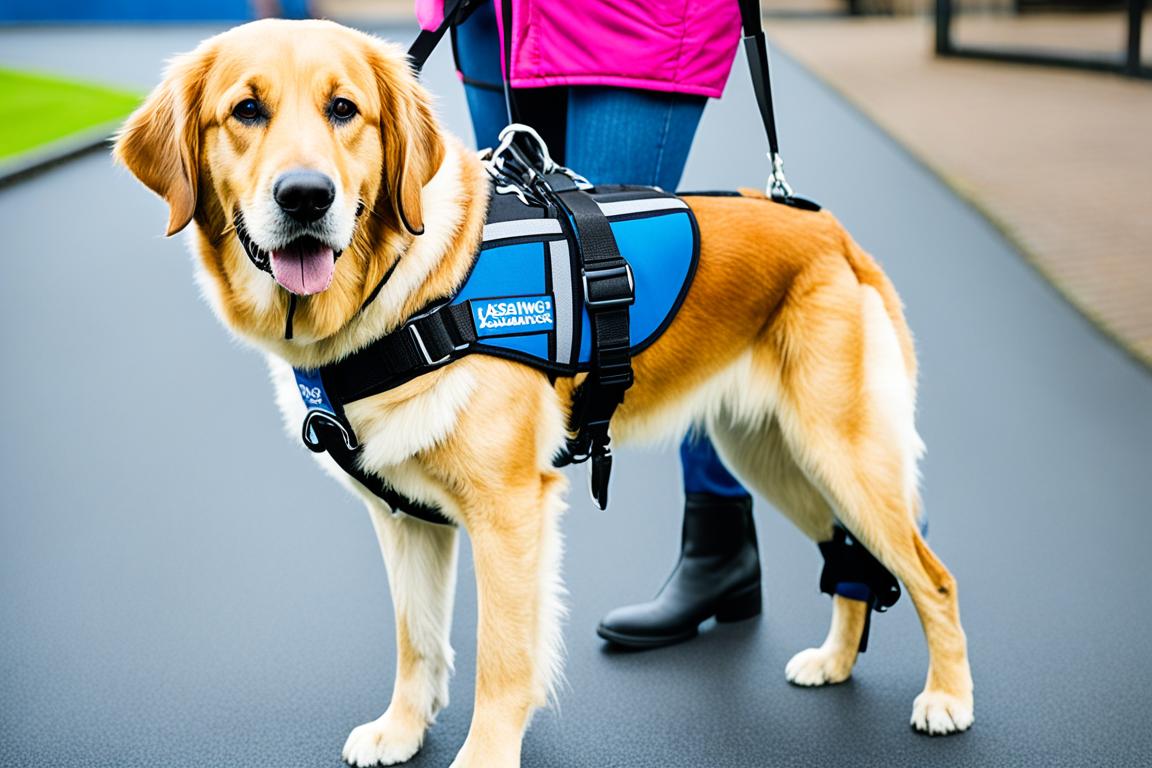
Leashes, Vests, and Other Complementary Equipment
Leashes must match the assistance dog harness well. They should keep your dog safe while letting them move easily. Vests or jackets help show your dog is a working animal. They also let you add more info or personal touches.
When picking accessories, think about how tough they are, if they can be adjusted, and if they’re comfy. Good quality service animal accessories make sure your dog is safe and happy. They meet your dog’s special needs.
“Exploring these accessory options can help you to create a comprehensive solution for your service dog’s needs.”
There’s a lot of disability support gear and canine support vests out there. But, focus on what’s important for your dog’s comfort and support. This way, you’ll find the right accessories to go with your service dog harness. Your dog will be ready for their big role.
- Leashes designed to work seamlessly with the service dog harness
- Canine support vests for identification and customisation
- Durable, adjustable, and comfortable disability support gear
- Comprehensive service animal accessories to meet your dog’s needs
Conclusion To The Assistance Dog Harness
Finding the right assistance dog harness is key for your dog’s comfort, safety, and effectiveness. It’s important to know how a well-fitted harness helps. You should look at different types, adjustability, and durability to find the best one for your service dog.
Make sure to measure your dog right, introduce the harness slowly, and keep it in good shape. This keeps your dog comfy and sure of themselves as they work. With the right harness and gear, like mobility harnesses and support vests, your dog can help you with ease and confidence.
Choosing the right harness and gear for your service dog is crucial. It makes sure they can do their job well. By focusing on comfort, safety, and functionality, you help your service dog do their job better. This improves life for both you and your dog.